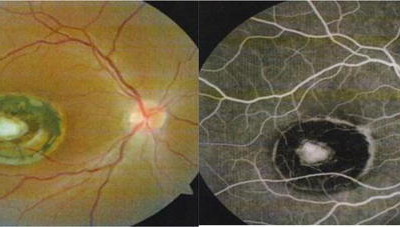
Conjunctivitis—or the danger that has just passed—is interpreted as the physical manifestation of a recent visual conflict or a strong emotional reaction (such as anger) to something one has witnessed that is perceived as unacceptable, repugnant, unworthy, or shameful.
Because the condition ends in “-itis” (denoting inflammation), the body is symbolically reflecting an internal irritation or rage triggered by a situation in one’s environment.
Through inflammation, excessive tearing, and the formation of discharge—which can sometimes “seal” the eyelids shut upon waking—the body attempts to temporarily prevent you from looking outward.
Symbolically, this acts as an effort by the organism to “wash away the filth” or erase a painful image from one’s field of vision. It is as if to say: “I am forcing myself to be temporarily blind because what is out there causes me suffering,” or “What I wish to see is no longer there.”
This process creates a visual isolation, allowing your energy to be directed toward healing the internal emotional impact.
Emotional conflicts associated with conjunctivitis:
First, there is the conflict of “not wanting to see” or a refusal to look:
Feeling that one “cannot bear to see” a specific situation—whether within the family, at work, or in one’s broader environment.
You have been exposed to a situation, action, or event that triggers a strong sense of rejection, disgust, or indignation.
For example: “What I am seeing repulses me and fills me with rage,” “I cannot stand to look at this,” “I cannot bear how this person acts or how they treat me—it deeply outrages me,” “What has been done to me is vile—a ‘filthy’ act—and I had to witness it with my own eyes,” or “I feel disgust or revulsion at this situation (within my family, at work, or in my relationship).”
Conjunctivitis can also manifest following a “visual separation conflict” (losing sight of someone):
This occurs during a traumatic, abrupt separation—when a bond is broken and visual contact with a loved one is suddenly interrupted.
It involves fear or pain stemming from the loss of sight of a loved one (such as a child, a partner who leaves, or a family member who passes away).
Examples include: “That person has been torn from my sight, and I suffer because I can no longer look at them,” “I have lost sight of my child, partner, or pet, and I feel panic or desolation,” or “I long to see someone who is far away, and their physical absence causes me deep pain.”
Visual imposition conflict (obligation): Conjunctivitis may manifest when a person feels forced to witness something that violates their personal space or their core values.
It also reflects a sense of helplessness, as the individual felt compelled to watch a situation that caused them internal distress, yet they were unable to close their eyes or change the reality before them.
Examples include: “I am being forced to look at this, and I don’t want to,” or “I have to live with this visual reality every single day, and it causes me deep inner irritation.”
Regarding laterality: The right eye (affective/relational) is linked to affection, family, one’s partner, children, and peers.
The left eye (danger/defense/territory) is oriented toward monitoring for danger, enemies, work-related matters, or external threats. For a left-handed person, these associations are reversed.
If none of these events have occurred in the person’s current life, the cause should be sought within the “project/sense” period (from conception to age three) or within the family tree.
If an infant or young child develops conjunctivitis, a biological perspective suggests looking at what the mother experienced during pregnancy: she may have witnessed something intolerable—such as infidelity, domestic violence, or a betrayal within the family—and felt compelled to remain silent while continuing to watch.
The infant inherits this inflammation as a way to “cleanse” the “filth” the mother witnessed.
Alternatively, the mother may have experienced intense stress due to losing sight of someone significant—for instance, the sudden death of a family member or being abandoned by a partner during pregnancy. The infant expresses this visual separation through their eyes.
From a transgenerational (family tree) perspective, the most common scenarios underlying conjunctival issues include:
Situations from the past that the family clan attempted to conceal, yet which some members witnessed—such as abuse, the theft of an inheritance, crimes, or the existence of unacknowledged children. In such cases, the descendant’s conjunctivitis serves as a cry: “There is ‘filth’ within this clan that my eyes are attempting to cleanse.”
Another possibility involves traumatic separations for which the grieving process never took place—for example, ancestors who were exiled or who migrated to another country, losing sight of their entire family forever; or the premature death of a child, where the parents “could not bear to look” at the coffin. The descendant then relives the pain of that original visual separation.
If you want to know more about the emotional origin of diseases or learn about the purpose of the soul, you can purchase my books by clicking on the Amazon link:
Image: opticareoptician.co.uk