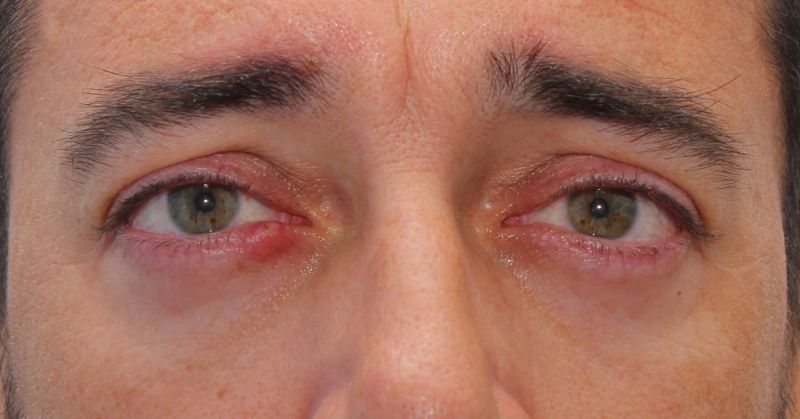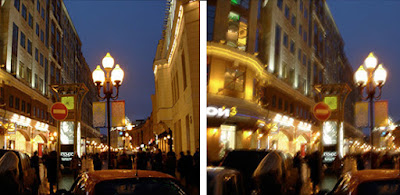
Astigmatism is characterized because the image is blurred by a defect in the curvature of the cornea.
Astigmatism is the consequence of a visual separation conflict in relation to something I see.
That is, I see what I don’t want and I don’t see what I want to see.
They are situations of not seeing outside what I have idealized inside.
Probably, in childhood I admired my father (real or symbolic) and because of some experience that occurred “he fell off the pedestal”, I stopped admiring him.
For example, a child whose father has fallen into alcoholism and, since then, frequently yells at him and hits him.
He has stopped seeing the image of his father when he was loving and feels separated from the ideal.
“I don’t want to see what I’m seeing”.
Or “I feel separated from what I want to see.”
“The image I have inside does not match the real image.”
Hence, the biological sense is that the distortion of perception protects me from reality, I want to admire but I can’t.
From this experience I will have to be very attentive because I will experience other similar conflicts in which I will admire someone but, later, I will be disappointed.
“I need to admire someone but I can’t, because of what happened.”
Those who suffer from astigmatism have psychic difficulties between their inner life and social life: “I look for answers on the outside and not on the inside”
Among oneself and others: “my way of acting and my thoughts are in disagreement with my surroundings”.
He has difficulty seeing things (or himself) as they really are, in an objective way, since he does not see them the same for him as for others.
“I refuse to see one aspect of reality as it is; since I can’t change it, I try to change my vision of things, distorting reality”,
“My ideal image is far from reality”
“I don’t like to see the world as it is, it seems harsh and cruel to me, this world is unbearable for me”,
“For this reason, I would like to transform a part of reality”,
“Similarly, I have the desire to get rid of my parents”,
“Above all, I want to hide something (personality, feelings, etc.)”,
“I don’t accept myself as I am at all”
He also has a hard time accepting a change from another and seeing whether or not it is right for him.
However, if the change is made by him, he will adapt immediately, without problems.
The astigmatic is a very susceptible person, who feels hurt easily.
It may be someone who, as a child, made the decision not to be influenced by others and adopted the attitude of seeing life only in their own way:
“For that reason, I want to free myself from the influence of my parents or anyone else who is offensive to me.”
I also recognize that I love my mother/father but at the same time I hate him/her.”
“Probably, I would like to be like him/her, but there is a part that I reject.
Above all, I don’t like his/her personality as it is, I don’t like that side.
But on the other hand I would like to be like them.”
Feeling of sufficiency: “I am disappointed with others and I can only count on myself”,
“I do not want to tell more than myself”
If you want to know more about the emotional origin of diseases or learn about the purpose of the soul, you can purchase my books by clicking on the Amazon link: