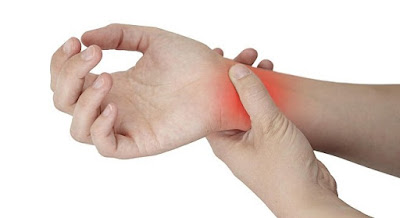
Wrist problems reflect emotional conflicts regarding self-worth—specifically those linked to flexibility, action, an inability to handle or control a situation, and the feeling of having one’s “hands tied” when facing work or family responsibilities.
Physiologically, wrist movements allow us to open the hand to offer something, close it to grasp or hold, and move it backward to push or set boundaries. Its function is to regulate our interaction with the world; it enables the biological acts of accepting help, providing support, or letting go of what no longer serves us.
When the wrist hurts, the body is temporarily altering this biological function—for instance, by limiting flexibility or precision—because an active conflict exists in one of these areas.
The biological significance of wrist pain is always a signal of repair following a conflict regarding self-worth in relation to a gesture, movement, or action.
The symptom (pain or inflammation) does not appear by accident; biologically, it serves to force you to stop and immobilize the joint so that the tissue—whether tendon, bone, or cartilage—can restructure and heal.
The main emotional conflicts associated with wrist conditions include:
First, a sense of professional devaluation—feeling useless and incompetent: This relates to daily work; it occurs when you hate or reject what you do, or feel frustrated by an inability to act freely.
Feelings of frustration or inadequacy regarding daily tasks, your profession, or the way you carry out your work.
This arises when you feel your actions are not good enough, effective enough, or sufficiently recognized in your job or daily duties. “What I do is pointless / I am not efficient enough.” “No matter what I do at work, it is never enough for others.”
Additionally, you may be affected by a conflict involving abuse and feeling “tied hand and foot”: the perception of being trapped in an unpleasant situation or job where you feel you lack the freedom to act or make decisions.
Experiencing abuse (whether emotional, workplace-related, physical, or an abuse of authority) is closely linked to wrist pain.
When someone abuses you, exploits your time, or manipulates you, your body processes this as a conflict of “feeling tied hand and foot” or “absolute subjugation.” You feel that, no matter how much you might want to defend yourself, you are unable or not permitted to take action.
Wrist pain can also stem from a lack of flexibility:
Since the wrist facilitates hand movement, issues in this area may reflect mental rigidity or resistance—whether toward a superior’s orders or regarding situations you are forced to handle against your will.
It can indicate an unwillingness to change how you do things or how you interact with your surroundings.
Pain can also arise from holding on too tightly: obsessively clinging to people, situations, ideas, or responsibilities that overwhelm you and no longer contribute to your well-being.
Conflicts regarding help (giving and receiving): Giving too much to others and feeling frustrated or resentful when that help isn’t reciprocated when you need it.
Thoughts like: “No one is lending me a hand with this burden; I have to resolve everything entirely on my own.” “I feel that if I fall, there is nothing to grab onto and no one to hold me up.”
The conflict of the “inhibited” or repressed gesture (suppressed aggression): The wrist is the joint that powers a punch or a push. If you have had an unconscious urge to strike someone, lash out, or physically defend yourself in a situation—but held back due to manners, fear, or moral reasons—that energy becomes blocked in the wrist.
Withheld hugs or caresses: This also applies to the frustrated desire to reach out, hug, or caress someone, leaving you with the unfulfilled urge to make that movement.
Likewise, wrist pain can arise from an overload of obligations and a sense of being coerced:
It symbolizes the burden of doing too much or carrying responsibilities that you feel do not belong to you or that exceed your capacity.
Is there an order, project, or task at work that you feel is being imposed on you in an unpleasant way?
Are you forcing yourself to provide financial support for—or care for—a family situation that you feel is no longer your responsibility or that is draining you?
Do you feel like you are signing or agreeing to something that goes against your inner convictions?
If you want to know more about the emotional origin of diseases or learn about the purpose of the soul, you can purchase my books by clicking on the Amazon link: