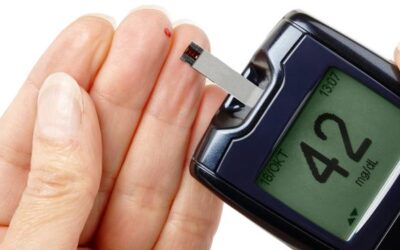
The fingers represent the details of our daily lives—the minutiae of the everyday—and the precision with which we carry out our actions.
They are the mobile parts of the hands, the elements that come into direct contact with small objects.
Biologically, we use our fingers for delicate tasks (writing, sewing, typing, holding something with care).
They also allow us to perform a wide variety of movements, manipulate objects, grasp things, and act with precision.
Each finger carries a specific meaning, which can offer insight into one’s emotional state.
Therefore, if something happens repeatedly to a particular finger—such as a cut, a fracture, pain, a burn, or even the habit of sucking on it—it may reveal a connection to a specific aspect of your own life or the lives of those around you.
In general, any symptom affecting the fingers points to a conflict involving a sense of devaluation regarding one’s own performance in tasks requiring subtlety or precision.
Such symptoms may reflect emotional wounds, self-directed anger, or feelings of guilt, all linked to daily life and routine or situational circumstances.
If a person experiences recurring pain or injuries in their fingers, it may suggest an underlying feeling of “incompetence or clumsiness”—a sense that “I am not precise enough in what I do,” or “Everything I do, I do poorly; I am clumsy when it comes to details.”
The fingers execute the final commands of our mind. When a symptom manifests in the fingers, it often points to an incongruity between what one wishes to do and what one feels compelled to do.
For instance, if the symptom is stiffness, it may represent a resistance to changing how you manage your daily life, or a lack of flexibility in the face of the demands placed upon you by your environment. “I refuse to compromise on the way I do things.”
If the symptom is pain upon flexion (making a fist), it may indicate a difficulty in “grasping” or holding onto something—such as a job, a relationship, or money—out of a fear of losing it.
It reflects a mindset of: “I must hold on tightly to this (money, a job, a partner, a position), because if I let go, I’ll lose everything,” or “I don’t want to let go of this situation.”
If the symptom is pain upon extension, it may reflect a fear of letting go or a resistance to opening oneself up to new, everyday experiences.
Allowing yourself to be flexible, accepting that not everything can be perfect, and learning to delegate or let go are the best emotional balms for our hands.
If you want to know more about the emotional origin of diseases or learn about the purpose of the soul, you can purchase my books by clicking on the Amazon link: