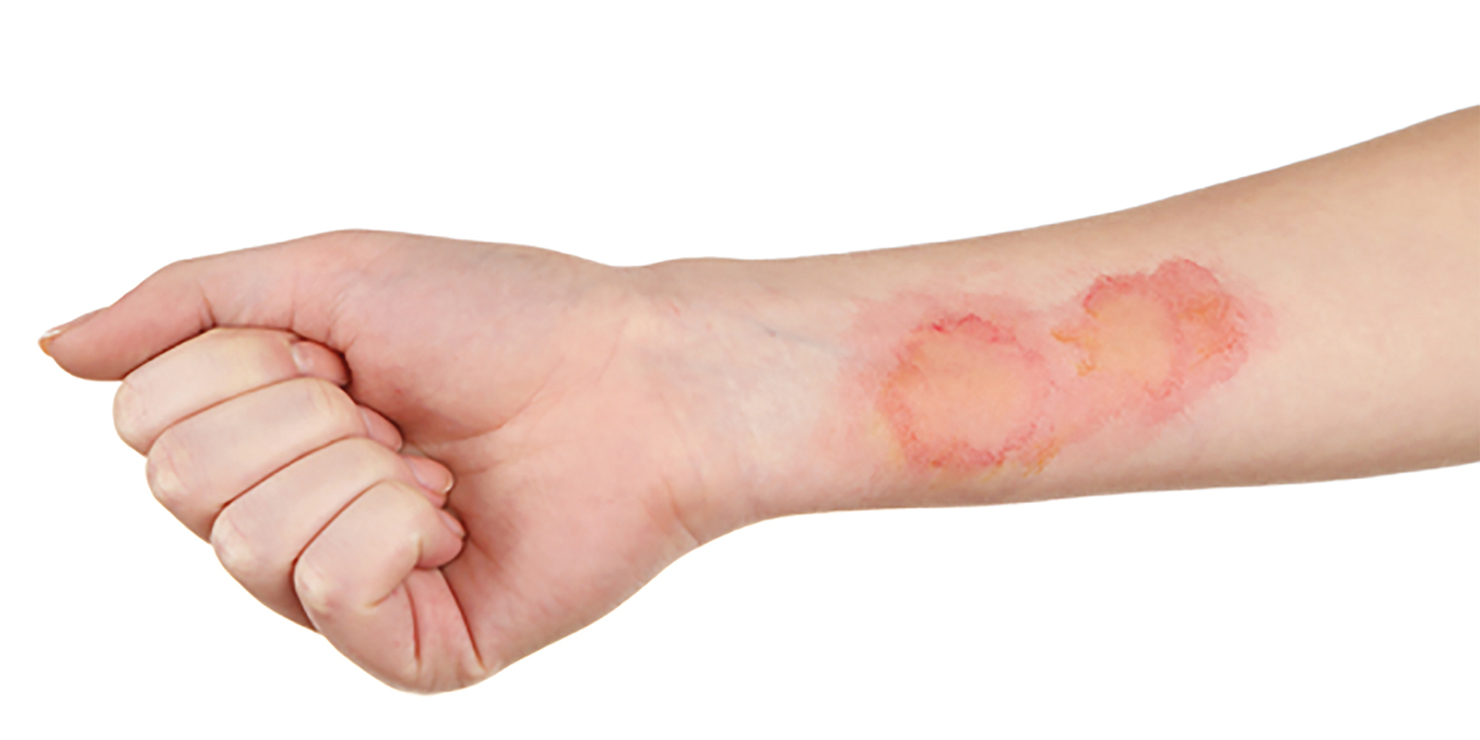
The emotions underlying burns are primarily linked to pent-up anger, intense rage, and conflicts regarding territorial boundaries or physical contact.
The skin represents our boundary with the outside world.
When a burn occurs, the unconscious mind often signals that a situation or person is “burning us up” or making us “boil with rage.”
Symbolically, the extreme heat of the external injury mirrors the internal emotional fire the person feels—a fire they are unable to extinguish or express appropriately.
Key emotional conflicts underlying burns:
First, uncontrollable anger, rage, or fury: Biologically, this represents a state of “burning up inside” due to intense anger or frustration that could not be expressed verbally or physically.
The person is literally “boiling with rage” toward someone, toward themselves, or in response to an unexpected situation.
“I’m boiling with rage,” “I’m full of hate,” “I hate that person.”
A burn can also indicate that we have suffered an act of aggression, an invasion, or a loss of territory: feeling that one’s personal space, home, or body has been intolerably invaded.
On a biological level, a burn may stem from a need to symbolically destroy a space that has been contaminated or invaded, or it may be a reaction to an extreme fear of losing what we consider our own.
It can also be linked to self-reproach, guilt, or an unconscious desire for self-punishment.
Furthermore, a burn can result from conflicts involving violent or painful separation; the biological function of the skin is contact.
A burn may reflect the pain of a drastic or sudden loss, or an urgent desire to distance oneself from someone perceived as aggressive and intrusive.
Meaning based on the element that caused the burn:
If caused by water, it is biologically linked to emotions, the mother, and female figures.
Consequently, it reflects a separation or contact conflict experienced with intense anger within a deep emotional relationship.
“I feel that the relationship with my mother (or my role as a mother/partner) is suffocating or burning me.”
This often happens amidst an atmosphere of constant arguments, suppressed tears, or an emotional climate in the home that is “boiling over.”
Hot oil burns: This element is linked to livelihood, work, money, and the protection of the home.
We may have experienced a conflict involving aggression, stress, or a sense of suffocation in the workplace or regarding family finances.
These burns occur in situations where we feel we must “cook up” a solution—or resolve heavy problems—entirely on our own and under immense pressure.
“I’m burning myself out trying to support my family,” or “I feel intense rage over an injustice at work.”
Burns caused by direct fire: These are associated with the father figure, authority, or one’s territory.
They represent an immediate anger directed at rules or a boss, or a feeling of total loss of control over one’s life.
Burns caused by steam: These symbolize things that are unseen yet deeply felt.
It represents repressed rage or sadness that goes unspoken but eventually “explodes.”
Questions for introspection:
If you have recently suffered a burn, you can analyze the situation by asking yourself these questions:
With whom—or in what situation—did I experience uncontrollable or pent-up rage just before the accident?
Did I feel that someone invaded my personal space or abused my trust, prompting a desire to push them away drastically?
Am I going through a painful separation that feels like an open wound?
If you want to know more about the emotional origin of diseases or learn about the purpose of the soul, you can purchase my books by clicking on the Amazon link:
Image: southtees.nhs.uk