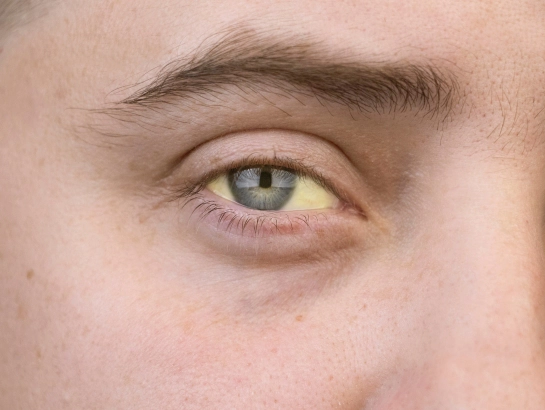
Jaundice (a yellowing of the skin and mucous membranes caused by excess bilirubin) is closely linked to territorial conflicts, suppressed anger, resentment, and a failure to process situations perceived as “toxic.”
Key conflicts associated with jaundice:
First, a conflict involving a threat to one’s territory (this is the most common type and affects the bile ducts): This conflict is triggered when you feel someone is invading your space, taking what belongs to you, or threatening your position.
The subconscious reacts by inflaming the bile ducts to “defend the territory”; upon resolution of the conflict, the ducts become temporarily obstructed, resulting in jaundice.
Examples include constant clashes with a boss or colleague vying for your job, family disputes over inheritance, or feeling that a third party (such as an in-law or ex-partner) is interfering in your household decisions.
Jaundice can also stem from a conflict involving anger, resentment, and suppressed bitterness: intense feelings of injustice or repressed rage toward a person or situation that could not be openly expressed.
The individual “swallows” their anger, blocking its natural flow—thinking, “What was done to me is a terrible injustice; it makes me sick/furious, yet I cannot say a word.”
The body physically accumulates this “bitterness” that failed to find release through words.
Another experience that can cause jaundice is a conflict regarding a lack or loss of sustenance, which affects the liver (a fear of “starving to death”):
The liver is the organ that stores glycogen (energy) for times of scarcity; therefore, it reacts to a deep-seated fear of losing the means of survival—whether money, food, a job, or basic resources for the family.
Thoughts such as “I won’t have enough to provide for my loved ones” or “The bread is being taken out of my mouth” exemplify this.
Finally, jaundice may stem from a lack of acceptance—an unwillingness to “digest” reality.
This occurs when one experiences a situation perceived as detestable, bitter, or unacceptable something the unconscious mind interprets as impossible to properly metabolize.
Newborn jaundice: During gestation, the baby does not possess a separate ego or identity; the baby and mother form a single emotional unit.
Consequently, the baby somatizes manifests physically the stress “biology” that the mother was unable to resolve or express verbally.
This symptom stems from a conflict involving a dispute, resentment, or a sense of injustice experienced by the mother regarding her “territory” during pregnancy.
Naturally, the baby has no underlying issue; rather, the infant is somatizing the mother’s lived experience.
Similarly, excess bilirubin can result from the mother’s unconscious desire to shield the baby from her partner’s family, whom she perceives as toxic.
Jaundice may also manifest when the mother doubts the quality of her breast milk or fears it is not good enough for her baby.
The baby senses: “I am absorbing a toxic atmosphere or a rage that does not belong to me.”
The mother’s projection: “I am afraid I won’t be able to nourish or protect my baby,” or “I feel alone, unsupported, or deeply angry about how the birth unfolded.”
If you want to know more about the emotional origin of diseases or learn about the purpose of the soul, you can purchase my books by clicking on the Amazon link:
Image: drjayanthgastrosurgeon.com