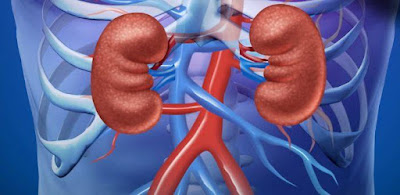
The kidneys are considered to harbor the most intense and sudden fears—akin to the “fight-or-flight” response or the tension felt in the face of danger.
Kidney problems are often associated with an intense fear of the future, of losing one’s life, or of a threat to survival.
They are primarily linked to conflicts involving uprooting, the loss of points of reference, survival fears, and the management of bodily fluids (which symbolically represent money, family, or emotions).
It is believed that the body manifests physical symptoms in the kidneys in response to conflicts where a person feels they have lost all support or finds themselves in an emotional “desert.”
Kidney ailments are linked to the following emotional conflicts:
First, the conflict of uprooting: This is the most common conflict and is triggered when a person feels completely alone, abandoned, or removed from their safe environment.
It occurs when a person feels that their entire world has collapsed irreversibly overnight—for instance, following a forced relocation, sudden job loss, or a breakup where the individual feels they have lost their “points of reference” or their foundation for survival.
Thoughts such as “My land has been taken from me,” “I am lost in the desert,” or “I have nothing to hold onto” characterize this state.
Furthermore, the kidneys can be affected by fluid-related conflicts (retention or loss):
Water is the vital element filtered by the kidneys. Symbolically, fluids are linked to the flow of life, money, and family ties.
They are associated with situations where a person feels they have “lost their bearings,” is “drowning” in circumstances, or is undergoing the grief of migration or a change of home (the metaphor of feeling “out of one’s own territory” or “out of one’s own waters”).
If you feel lost in the “desert”—lacking reference points or money, or finding yourself in a hospital or abandoned by family—the brain interprets this as a risk of dying from dehydration.
This tissue acts as the kidney’s filter and regulates pressure and water filtration.
It responds to fluid-related conflicts—whether a literal fear of water or a fear of losing money, financial liquidity, or family reference points.
Thoughts such as “If I lose this, I’ll die” or “Money is slipping through my fingers like water, and I’m going to be ruined” are typical of this state.
Likewise, the kidneys are affected by issues regarding territory:
They are linked to the concepts of “territory” and boundaries. Since territory is marked via urine (in biological, animal terms), urinary and kidney problems can reflect conflicts over asserting one’s position, defining family boundaries, or navigating difficult dual relationships.
It involves feeling that someone has invaded your privacy, your home, or your workplace, and not knowing how to set boundaries—or feeling unable to define what is yours.
Examples include a family member interfering in your decisions, a colleague taking credit for your achievements, or a sense that your privacy is being violated. Thoughts like “My space is being invaded and there’s nothing I can do about it” or “I don’t know how to set boundaries with others in my own home or workplace” are common.
Another situation that can affect this organ is “having to choose between two paths”:
The kidneys are paired organs (right and left) that constantly filter to separate the good from the bad (retaining what is useful and discarding the rest). Symbolically, therefore, they are associated with major life decisions.
Thoughts such as “If I choose this, I lose that,” “I don’t know what to decide; I’m paralyzed between two options,” or “I’m afraid of choosing the wrong path and destroying myself” arise here.
This includes deep uncertainty about whether to divorce or stay, whether to move to another country or remain put, or facing severe moral dilemmas.
Similarly, the kidneys can be affected by relationship and cohabitation issues:
These reflect the duality of one-on-one interactions with others and the difficulty of letting daily events unfold naturally.
Physically, we have two kidneys, so the organ symbolically represents the balance between two parts.
Kidney issues can arise from serious conflicts in relationships or partnerships—situations where you feel there is no fairness and the scales are always unfairly tipped against you. “I feel caught between a rock and a hard place with my partner,” or “I can’t seem to balance what I want with what others expect of me.” “What is being done to me is a terrible injustice,” or “I am being judged harshly and cannot defend myself.”
Another conflict that can affect the kidneys is related to the fear of making the wrong decision:
The kidneys are associated with the archetypal function of “filtering” the good from the bad (distinguishing what the body needs from waste). “I’m afraid of making the wrong choice and ruining my life,” or “I feel like I made a ‘dirty’ or toxic decision, and now I don’t know how to cleanse it.”
Finally, bitterness and suppressed anger can also affect the kidneys:
Chronic stress and unresolved anger can indirectly damage kidney energy.
This is often triggered by recurring family upsets or disappointments involving close loved ones—situations experienced with a deep sense of disillusionment. “I have to be strong; I can’t fall apart or cry over this injustice.” “This leaves a very bitter taste in my mouth that I just can’t shake.”
Questions for introspection:
What situation occurred in your life—just before the kidney discomfort began—in which you felt completely alone or abandoned?
Do you feel you are facing a “life-or-death” situation regarding your finances or family?
Who are you tolerating within your personal space without being able to set a clear boundary?
If you want to know more about the emotional origin of diseases or learn about the purpose of the soul, you can purchase my books by clicking on the Amazon link: