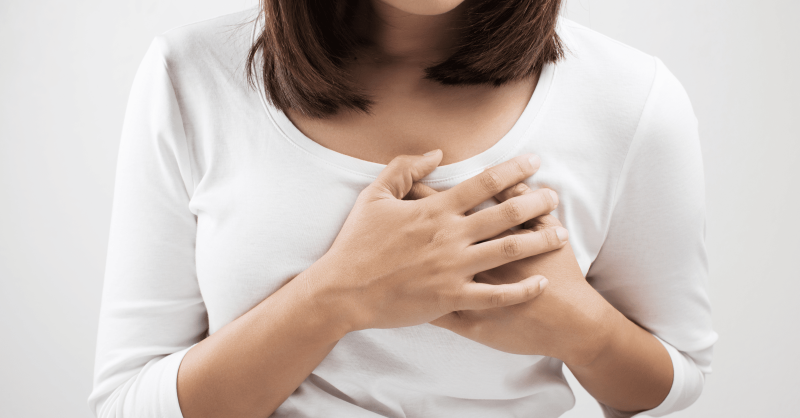
The breast symbolizes the maternal function of nurturing and feeding; therefore, inflammation (mastitis) is interpreted as a manifestation of repressed tensions within the family or the relationship with one’s partner.
Mastitis is linked to emotional conflicts regarding protection, a lack of support, disputes within the “nest” (the home or family), or separation issues related to motherhood and the nurturing of children.
The biological significance of mastitis varies depending on the affected tissue, but generally, it represents an emergency response aimed at increasing milk production or protecting the tissue against a threat of separation or danger within the nest.
Emotional conflicts associated with mastitis:
First, conflicts involving self-imposed pressure and frustration regarding motherhood: feelings of guilt over not being a “perfect mother,” or the perception that the baby is in danger combined with not knowing how to adequately protect them.
Conflicts with one’s partner: a sense of lacking support from the spouse regarding childcare or household responsibilities. Repressed resentment stemming from this disconnection unconsciously manifests as inflammation.
“I feel completely alone, bearing the entire weight of the household and the children.”
“I feel like I have two children: my baby and my husband, whom I also have to support and care for.”
Another possibility is a conflict involving disillusionment and the shattering of the ideal image of the partner:
This arises when the partner commits an act that destroys the trust or sense of security they provided to the “nest” (such as infidelity, belittling behavior, or constant fighting). “The man I trusted to build this family has betrayed or devalued me.”
“I feel a deep sense of anguish because the nest we built is being destroyed by our fighting.”
Mastitis can also be triggered by a conflict involving unwanted physical contact or sexual rejection:
The physical pain and inflammation associated with mastitis act as a “protective shield.”
The body says “no” through the symptom when the woman struggles to set that boundary verbally or consciously. “I don’t want to be touched,” or “I feel obligated to fulfill sexual duties when all my energy is focused on child-rearing.”
Likewise, a “nest” or separation conflict may be at play: This is associated with extreme worry regarding the safety, care, or protection of the offspring (the baby) or a member of one’s immediate circle.
Such conflicts are linked to disconnection, rejection, or the fear of having someone torn away—or even an unconscious desire to sever the bond due to stress. “My child (or a loved one) has been torn from my breast; I feel forcibly separated.” “I don’t want to breastfeed / I don’t want to give this part of myself, yet I feel compelled to do so.” “I want to protect my child from his father (or the environment); I want to shield him so that no one else can touch him.”
Similarly, mastitis can manifest due to a conflict between being a “mother” and being a “woman”:
Mastitis can also reflect an identity crisis in which the role of parenting consumes one’s intimate life.
It may stem from accumulated anger at feeling that one’s own needs have been completely sidelined to meet family demands. “I struggle to find a balance between caring for my children and feeling like a fulfilled woman.” “I feel guilty for wanting to reclaim my body, my personal space, or my sexuality.”
Finally, mastitis can occur due to frustration regarding breastfeeding or “failed” parenting: This happens when the reality of motherhood falls short of the idealized expectations the woman had envisioned. “My baby isn’t gaining weight,” “I’m not producing enough milk,” “Breastfeeding hurts, and I feel like a monster for wishing the feeding would end.”
Regarding laterality (for biologically right-handed women):
Left Breast (mother/child): Generally associated with the “mother/child” conflict (feeling like a bad mother or fearing for the child’s well-being).
In biologically right-handed women, it can also reflect issues with one’s own mother. “I feel like my mother judges or smothers me.”
Right Breast (partner/peers): The feelings are directed toward peers or equals, such as a spouse, siblings, father, or colleagues. “My partner doesn’t support me in parenting; I feel alone in managing the household.” “I feel like my husband acts like a child I have to support.” (For biologically left-handed women, this laterality is reversed.)
If you want to know more about the emotional origin of diseases or learn about the purpose of the soul, you can purchase my books by clicking on the Amazon link:
Image:bellybelly.com.au