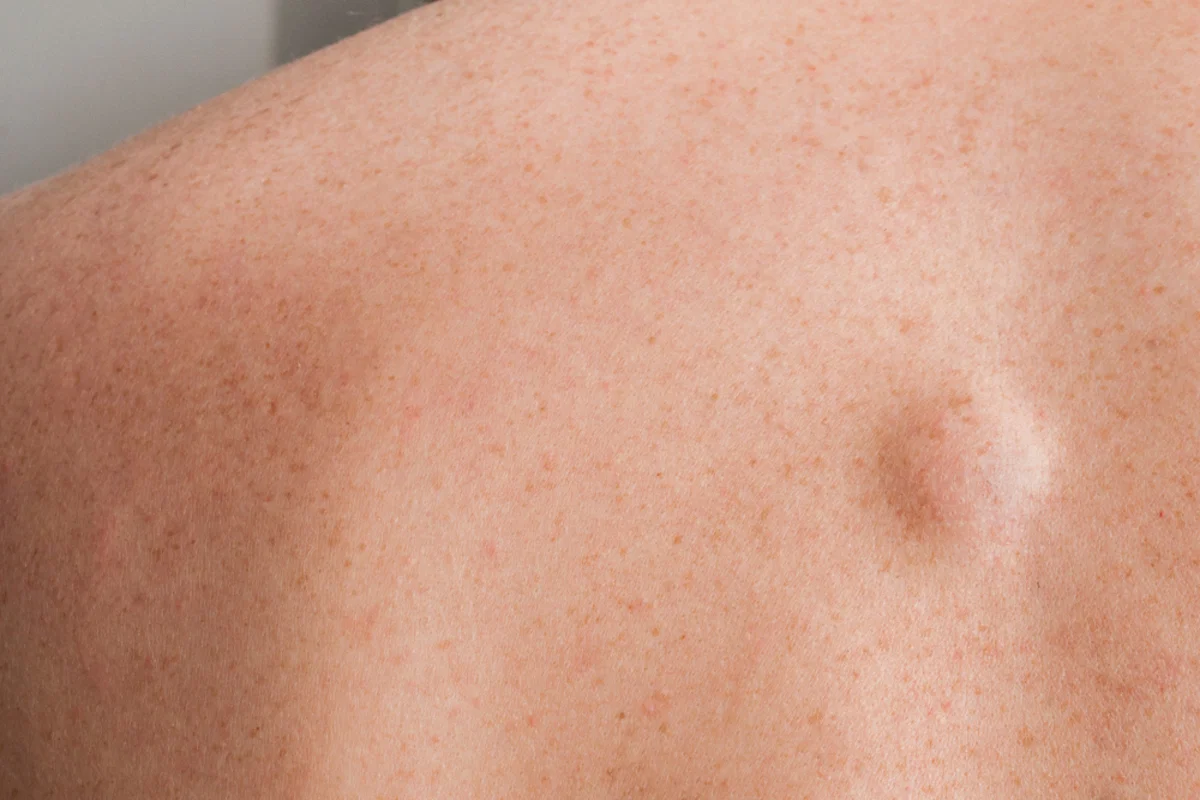
From the perspective of Biological Laws, fat represents reserves and protection and therefore, when a lipoma develops, the body is attempting to protect, in a very localized way, a specific area that has felt attacked, devalued, or aesthetically rejected.
The biological conflict associated with lipomas is related to an experience of devaluation combined with a feeling of helplessness or vulnerability in the face of an unresolved situation.
It is the experience of “I need to protect myself but I don’t know how,” lived silently, and then the brain sends fat to that area to protect it biologically.
Main emotional conflicts that cause lipomas:
Need for protection after experiencing an impact, aggression, or emotional (or physical) “blow” in a specific area.
The fat acts as a biological cushion so that future impacts don’t hurt as much.
Likewise, a lipoma can be a consequence of local aesthetic devaluation:
For example, if I feel that a specific part of my body is ugly, imperfect, or unpleasant.
The brain responds by accumulating fat there to “hide,” “fill,” or protect that area from external gazes or judgment.
Similarly, a lipoma can appear due to an unresolved burden conflict (“carrying something or someone”).
Frequently associated with lipomas on the back, shoulders, or other “burdened” areas.
This conflict reflects the experience of carrying responsibilities, people, or situations that the person feels do not belong to them, but which they assume out of loyalty, guilt, or fear of abandonment.
It is a conflict arising from the encapsulation of a prolonged emotion, especially sadness, resentment, fear, or a situation that has not been digested or eliminated.
The body chooses to “encapsulate” it, and the lipoma becomes the container of that unexpressed emotion.
The meaning according to location:
If the lipoma appears on the arms, it is related to work, action, or the ability to “embrace” or hold onto someone.
When it manifests on the back, it expresses the feeling of carrying too many responsibilities, lack of support, or feeling unprotected from behind (“attacks from behind”).
“They laugh at me behind my back,” “I protect myself from a blow I have received.”
On the abdomen, it speaks of the need to protect vital organs or conflicts related to family and the internal organs.
On the thighs or legs, it indicates conflicts about direction, resistance to moving forward, or a devaluation of one’s own physical attractiveness.
If it appears on the face, it indicates: “They are laughing at me to my face,” “I am protecting myself from an unwanted kiss or caress.”
Lipomas typically grow or become more noticeable during the repair phase (vagotonia), that is, when the stress of the original conflict begins to subside or the person feels they have overcome the initial danger, and the body proceeds to encapsulate the excess tissue.
Questions for reflection:
What do I feel I have to carry that isn’t really my responsibility?
What or whom have I felt I need to protect myself from without having the resources to do so openly?
Is there an experience of lack or loss in my family history that hasn’t yet been processed?
In what area of my life do I find it difficult to “let go,” whether of objects, relationships, or emotions?
If you want to know more about the emotional origin of diseases or learn about the purpose of the soul, you can purchase my books by clicking on the Amazon link:
Image: tuasaude.com