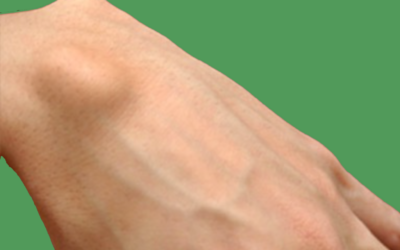
The lunate bone (semilunar bone) is located in the wrist, forming part of the proximal row of carpal bones.
It sits precisely in the center of the wrist base, between the scaphoid and triquetrum bones, and articulates directly with the radius.
The wrist represents the flexibility to carry out the commands of our mind and will be affected if we perform an action we don’t want to do or are forbidden from doing something we deeply desire.
It represents a conflict between obligation and desire in the workplace or in direct action.
As a central structure for wrist mobility, its symbolic impairment indicates a difficulty in “managing” one’s life or a specific situation.
An injury can reflect an inability to manage, hold, or release control of a heavy burden, a relationship, or a belief.
The name of the lunate bone comes from its crescent shape.
In the language of the unconscious, the moon represents cycles, phases, and the passage of time.
The lunate bone (located in the center of the wrist) is directly linked to a feeling of worthlessness related to time, the pace of actions, and precision in work or daily tasks.
Do you feel that “it’s not the right time,” that “time is running out,” or that you’re moving at a different pace than what your environment demands?
There is strong internal pressure to control the timing of a project, a job, or a family situation.
As part of the skeletal system, any discomfort at this point reflects a perception of inadequacy or a harsh judgment of oneself in terms of action and interaction with life.
The lunate bone is a key piece in the proximal row of the carpus, connecting the forearm to the hand, allowing the flexibility, extension, and rotation necessary to navigate the world.
Similarly, discomfort in the lunate bone can be related to emotional conflicts about the ability to hold, release, manipulate, or manage situations that require delicacy or precision.
This bone is key to fine motor skills, and I may experience problems if I feel unable to act with the necessary delicacy in the face of change.
These issues can manifest as a feeling of “not being precise enough,” “making mistakes in what I do,” or feeling that the activities I perform with my hands (writing, knitting, operating, working with tools) are judged or clumsy.
I may feel undervalued in meticulous gestures or at work.
This bone also represents reflection, illusion, and can be affected if I have devalued myself by being deceived about doing or accomplishing something I thought was magnificent, but which didn’t turn out well.
“This isn’t what I was told, or it’s not what I believed.”
It’s an emotion of disappointment with the results obtained after so much effort.
It could be a task or job to which I dedicate many hours, but the gains are minimal.
What situation in my life do I feel I can no longer handle or endure?
What or who am I clinging to that is causing me pain?
In what aspect of my life do I feel I lack flexibility or freedom of movement?
What “blow” (literal or metaphorical) did I recently receive at work or in my family environment that limited my actions?
Fractures or trauma to the lunate bone: These represent a direct impact or a drastic halt to an action.
The unconscious mind materializes a blow to force you to stop an activity in which you feel trapped or judged.
It is essential to assess biological laterality (whether you are right-handed or left-handed).
This interpretation is valid for right-handed people; for left-handed people, it is reversed:
If the right wrist is affected in right-handed people:
The conflict is usually related to the workplace, external projects, status, the father, or rivals/coworkers.
When the pain is located in the left wrist: It is linked to the intimate sphere, the mother, children, and home.
Kienböck’s disease manifests when the lunate bone in the wrist undergoes avascular necrosis, or death of bone tissue due to lack of blood supply, causing the bone to crumble.
It is interpreted as a symbolic “death,” a profound devaluation related to manual labor, or a situation where the person feels “trapped” and without a way out.
This equates to an acute and prolonged devaluation conflict:
“I feel that the foundation of what I do is collapsing,”
“I no longer have the strength or courage to sustain this work or family situation,”
If you want to know more about the emotional origin of diseases or learn about the purpose of the soul, you can purchase my books by clicking on the Amazon link:
Image: orthoinfo.org