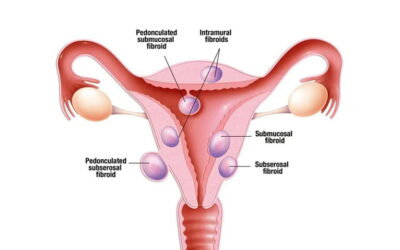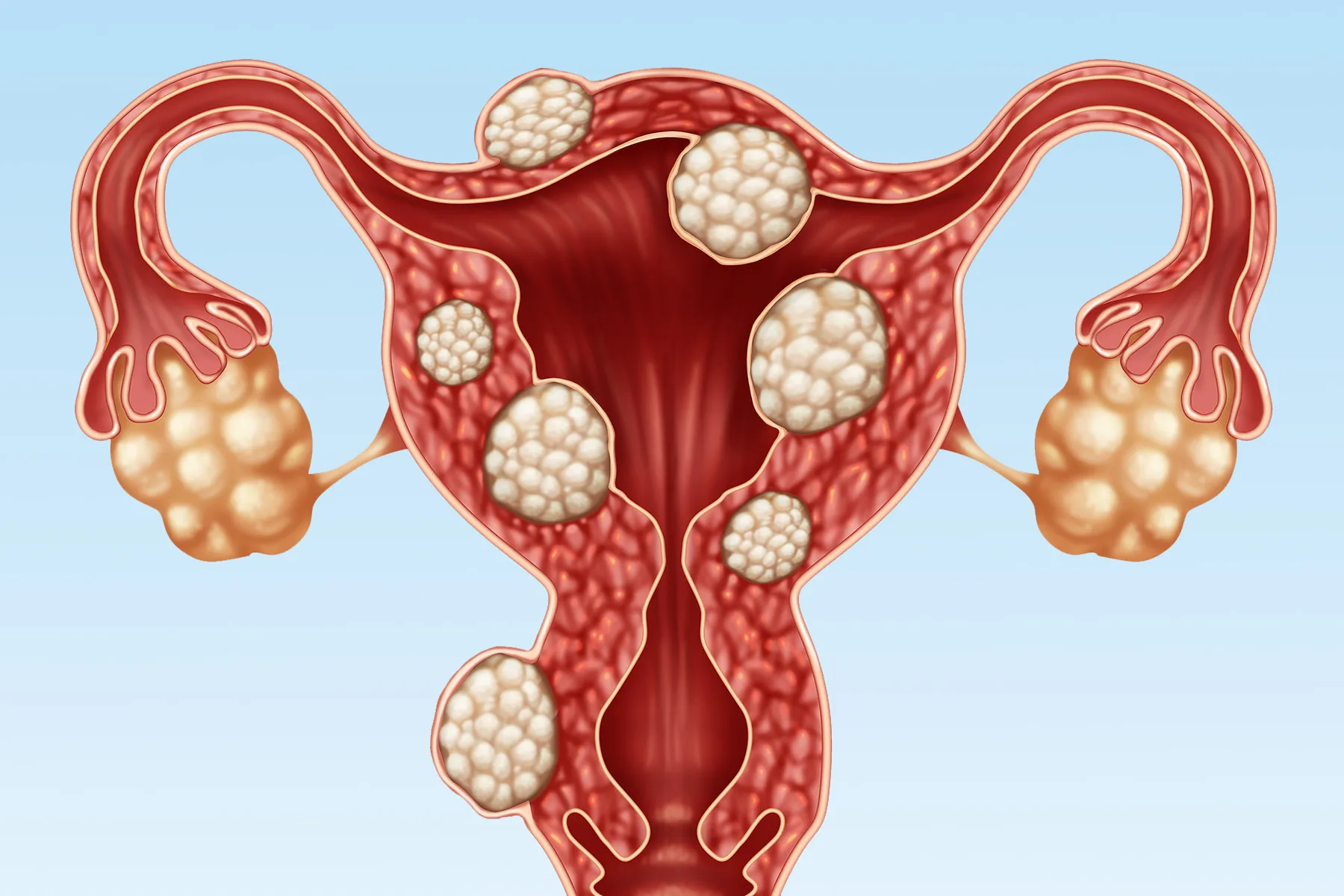
Uterine fibroids are considered the physical manifestation of a deep emotional conflict linked to the symbolic concept of “home,” frustrated motherhood, or a profound sense of devaluation within the family or a romantic relationship.
The body unconsciously generates this tissue as a mechanism for protection, retention, or as a symbol of a child or project that has not materialized.
The biological purpose of the fibroid is to add muscle mass, thereby providing greater strength for retention, protection, and space within the reproductive or family sphere.
Key emotional conflicts associated with fibroids:
First, defending or enlarging the “home” (one’s territory): Biologically, the uterus is the human being’s first home and represents the family dwelling.
If a woman experiences a conflict in which she feels her home is in danger, that she is about to be evicted, or that her territory is too small to accommodate her loved ones, the biological response is to enlarge the uterine walls to “make more room” or to fortify the structure of the home. “Someone is invading my home, and I cannot protect myself.” “My home is too small to house my family.” “I feel like they want to kick me out of my own home or my job.”
The fibroid as a symbolic child (creating a substitute child):
When there is deep emotional distress over a child that never arrived—whether due to a miscarriage, a pregnancy postponed for years, or an inability to conceive—the unconscious mind (which does not distinguish between the real and the symbolic) may fill that void by creating a “child of flesh” within the uterus.
The fibroid occupies the space of the baby that is longed for or secretly mourned. “I want to have a child but cannot; I feel incomplete.” “This business or project was like my child, and it has died or cannot be born.” “I must create my own child (of flesh/tissue) to heal my loneliness.”
Another cause may be the need to make the uterus “stronger” in order to retain a child:
If the unconscious detects a risk of loss—such as previous miscarriages, a fear of infertility, or the dread of losing an existing child—the biological command becomes: “We need a more powerful uterus so the baby doesn’t fall out.”
The brain produces more muscle (the fibroid) to thicken and strengthen the walls of the “cradle.” “I must hold onto this at all costs.” “It is slipping away; I cannot hold onto my child, my partner, or my youth.” “I lost my baby and need to fill that empty space immediately.”
The uterus can also be affected by a conflict regarding feminine self-worth: This arises when a woman experiences a drop in self-esteem related to her role as a partner, mother, or woman, enduring a situation of powerlessness or injustice that feels like a physical “weight” in the pelvic area. “My partner doesn’t value me as a woman; I feel used during intimacy.” “I am not capable or good enough to start a family.” “I need to put up a barrier in my uterus so I won’t be hurt again.”
The cause of a fibroid can also be found in the “sense project” and linked to the emotions my mother experienced while pregnant with me:
“I don’t want my pregnancy to show; I don’t like being pregnant,” or “I’m ashamed for people to see my belly; I don’t like my pregnant body.”
If a woman harbors an unconscious belief that pregnancy is bad—because that is how her mother made her feel—she may become a “mother” to fibroids; in doing so, she fulfills others’ expectations while avoiding the risk of looking bad, gaining weight, or having the pregnancy discovered.
Finally, a uterine fibroid can express the message that “the house is occupied.” Why does the woman occupy her “house” (her womb) in this way?
It could be because she does not view her partner as the ideal father for her children, or because she has been abandoned and uses the fibroid to signal that she is not looking for another man and does not wish to conceive with one.
Thus, the fibroid serves a contraceptive function.
Alternatively, it may arise because the woman has just had a miscarriage or simply does not want children; her unconscious mind dictates that it is not the right time to conceive.
A second meaning applies to intramural fibroids and those that do not fill the uterine cavity; these serve to replace the child she desires but cannot have.
As it involves tissue growth within the uterus, symbolic interpretation equates it to a child being held back, a blocked idea or project prevented from coming to fruition, or a powerful emotional attachment one cannot let go of.
The fibroid acts as a surrogate child that soothes a woman’s anxiety.
If none of the above applies, one must look at transgenerational patterns to see if there are negative programs within the family lineage regarding women; the fibroid manifests when a woman suffers devaluation or abuse.
This is often linked to humiliation—such as the pressure to find a partner or family demands that she prove her worth—compounded by a sexuality that is not truly enjoyed but rather treated as a transaction: sex exchanged for love, to prevent abandonment, or to conceive a child. These factors completely devalue the woman.
There is no confident, brave, strong, or determined woman here; instead, there is a woman afraid of being alone, afraid of not being able to become a mother, or afraid that her partner will abandon, cheat on, or reject her.
The size of the fibroid indicates when the conflict began. If the fibroid measures 1 cm, the origin of the conflict should be sought one year in the past.
Once the emotional root cause of the fibroids has been identified, you should write a “grief letter” to help them disappear and prevent new ones from forming.
For introspection:
From whom am I trying to protect myself within my own home or intimate space?
Do I feel that someone is encroaching on my personal space (partner, family, work) and I don’t know how to set a boundary?
What—or whom—am I trying to hold onto so tightly out of fear of being left empty?
Is there a miscarriage or loss (whether physical or symbolic, such as a project or business that didn’t work out) that I have not yet fully mourned or accepted?
In which areas of my life have I felt devalued, used, or diminished in my role as a woman or a partner?
Have I been shouldering the burden of being both “the man and the woman of the house,” thereby neglecting my own vulnerability?
Am I carrying the fears, difficult childbirth experiences, or pain of the women in my family who came before me?
If you would like to learn more about the emotional origins of illnesses or discover your soul’s purpose, you can purchase my books by clicking the Amazon link:
Image: webmd.com