A wart is a hard bump on the skin.
What biological purpose does a wart serve?
What is its role?
It acts as a small shield. What for?
To protect us from an attack or aggression—whether real or symbolic—directed at that specific area.
This happens specifically when we have been disrespected or have felt attacked, wounded, criticized, touched, kissed, or dishonored—whether by unwanted physical contact, a comment, an insult, an offense, a contemptuous remark, or mockery that pierced us like a thorn; especially if this occurs publicly, in front of our professional, family, or social circles.
Key emotional conflicts associated with warts:
First, a “stain” conflict or an assault on one’s integrity: This is the most common conflict.
It is triggered when a person experiences a situation they feel has soiled, stained, or splattered their reputation, dignity, or moral standing.
Examples include thoughts like, “I feel tainted by what was said about me,” “This situation feels disgusting or dirty to me,” or “I have been disrespected in a truly vile way.”
The body produces the wart to create an “insulating” shield over the area that has been symbolically splattered by external filth.
Another possibility is a conflict involving unwanted contact or rejection:
This arises from unwanted physical or visual contact, or from being forced to coexist with a person or thing that provokes revulsion.
Examples include, “I don’t want this person touching me,” “Being in this place makes me feel sick,” or “I feel someone else’s gaze judging and invading me.”
The wart physically interposes itself between the skin and the outside world to block that hostile contact.
Likewise, a wart may stem from a separation conflict involving something “toxic” or “clingy”: This conflict arises when a person feels tethered to a situation or individual they urgently wish to break away from—perceiving them as a dirty burden or a parasite—yet does not know how to do so.
“This person is clingy; they suffocate me, and I can’t shake them off,” or “I am trapped in a murky affair I want to break free from.”
This is very common with skin tags (hanging warts).
The tissue grows outward, seeking to create leverage to push and pull at the skin, symbolizing the act of tearing away or detaching from that toxic bond.
They may also be linked to a rivalry conflict or “marking territory”:
When warts appear in clusters (several together) or recur frequently, the subconscious may be responding to a territorial dispute where the person feels compelled to defend their space, ideas, or position against a rival. “I have to put up a barrier against my siblings or coworkers because they are encroaching on my space,” or “I feel I need to toughen up so I don’t get walked all over.”
In children and adolescents, warts are often linked to social and school adjustment or to authority dynamics at home.
Examples include feeling forced to kiss relatives they dislike, being publicly criticized by a teacher (a feeling of being “stained” or shamed in front of the group), or being mocked at school (bullying).
Lacking the maturity to verbalize a boundary (such as “don’t touch me” or “don’t speak to me like that”), their body expresses that boundary biologically by thickening the skin in response to the environmental aggression.
Finally, a wart may mask self-rejection: conflicts involving severe self-criticism or a failure to accept a specific physical or aesthetic aspect of oneself. (See Wart
Biological and emotional significance based on the location on the body:
Warts on the hands—palms and backs of the hands: The palm represents the father archetype, the paternal function, or your own role as a father.
It is associated with authority, protection, work, livelihood, and job performance.
It is the part of the hand used to hold the tools to “bring home the bread” or to strike a blow in defense of one’s territory.
Therefore, a wart on the palm often points to a conflict involving a “stain” or rejection linked to the father, a boss, money, or your own ability to provide.
The back of the hand represents defense against the outside world and protection.
It may be related to an offense suffered at school, especially if accompanied by humiliating reprimands.
For example, if I judge myself—or am judged—very harshly regarding my handwriting (e.g., “You must write well”), the child feels a sense of diminished self-worth because they fail to correctly execute the required exercises.
If the wart is located on the fingers, it is necessary to examine the specific meaning of each finger.
When it appears on the face, head, or neck (identity and self-image): The face is our calling card to the world.
Warts in these areas speak to how we see ourselves and how we believe others see us.
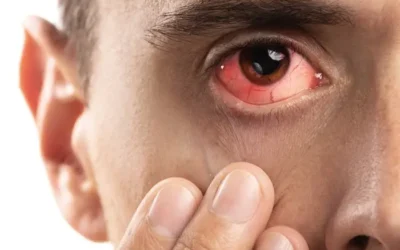
Near the eyes/eyelids: Having witnessed something that caused a profound sense of disgust, filth, or danger (“I don’t want to see this,” or “Someone’s judgmental gaze hurt me”).
On the cheeks or forehead: Feeling ashamed of oneself, fearing a “loss of face” in one’s social circle, or having received direct criticism regarding one’s intellect or appearance.
If it appears on the nose: Feeling that something “smells fishy” (distrust, suspicion of betrayal).
On the neck: A wart here indicates difficulty digesting an unfair situation or harboring resentment over having to “bow one’s head and swallow one’s pride” in the face of humiliation.
Back and shoulders (burdens and the unexpected): Shoulders/upper back:
Feeling the weight of imposed responsibilities that you believe are not yours to bear and that “dirty” your life.
Back (general): Feeling that someone you trusted has criticized or attacked you behind your back, where you could not defend yourself.
Armpits: These signal a situation involving separation from those you feel compelled to protect “under your wing”—associated with affection on the right side or danger on the left (the reverse for left-handed people).
Eyelids: These indicate a sense of devaluation regarding what one sees. “I do not see any recognition of my worth.”
A wart on the arms: indicates a sense of devaluation regarding what I do with them.
“I am not good at my job or at fulfilling my duties.”
On the other hand, if it is on the neck: it points to an aesthetic devaluation. “I am aging.”
It may also indicate an area where I received an unpleasant or “dirty” kiss or caress.
On the knees: A conflict of submission or obligation.
Feeling forced to “kneel” or bow to another person’s will (a boss, a partner, a parent) while resisting doing so.
Genital areas and pubic region (intimacy and offspring): Conflicts involving guilt, frustration, or shame in the sexual or relationship realm.
Genital/anal area: Having experienced intimate contact that was perceived as “dirty,” abusive, or forbidden.
It may also reflect a fear of being judged for one’s sexual orientation or desires, or a feeling of: “I feel spiritually or physically used.”
On the sole of the foot (plantar warts): A conflict regarding separation from the mother or from the earth.
The foot treads the ground; biologically, it represents one’s roots. “I do not want to step foot in this place” (e.g., going to a job you hate, returning to a home filled with tension) or “I feel like I lack solid ground or support beneath my feet.” “My mother has thrown me out.”
If you want to know more about the emotional origin of diseases or learn about the purpose of the soul, you can purchase my books by clicking on the Amazon link:
Image: pods.org.uk